 March 28, 2022
 Are There Driverless Trucks in Houston,TX?
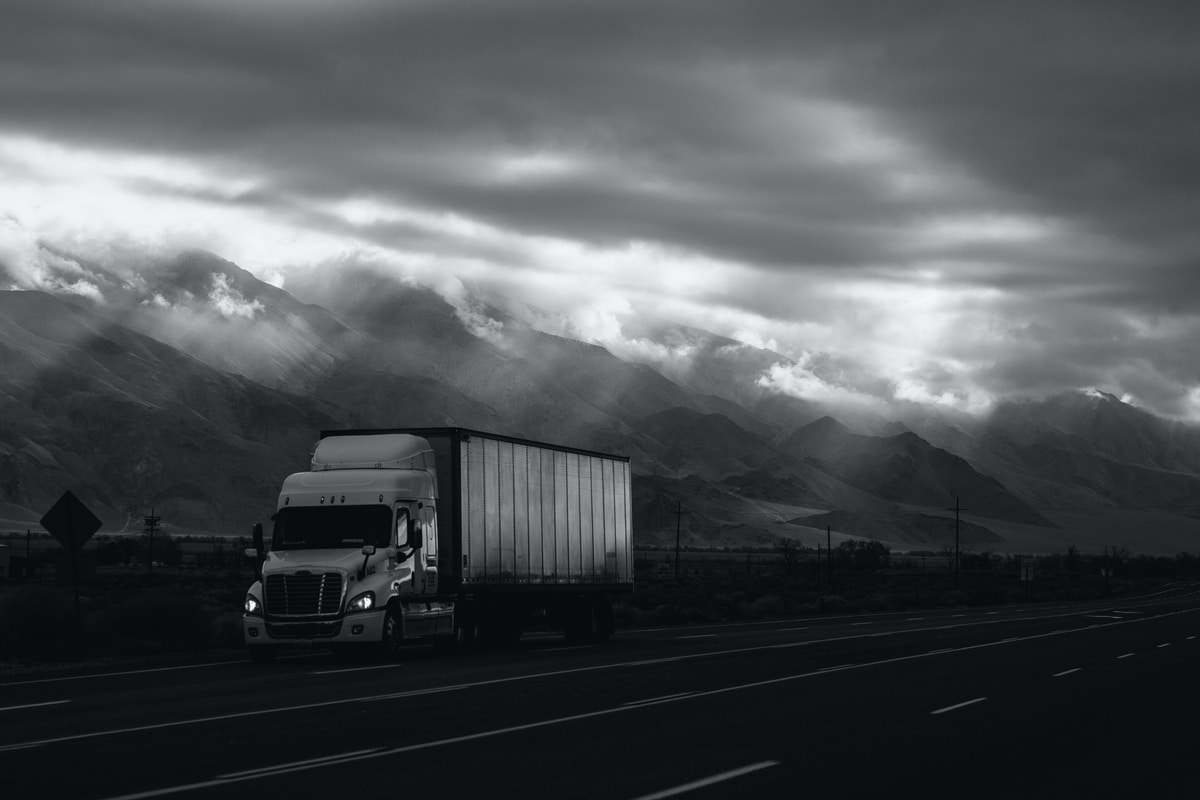
Autonomous or driverless trucking refers to self-driving technology used in commercial trucking, most often in semis for long-distance shipping. They work using software, sensors and onboard computers instead of the driver and handle such driving tasks as steering the wheel, braking, changing the lanes or controlling the speed.
The Society of Automotive Engineers or SAE, an American engineering group working on the development of the automotive industry since 1905, has set 6 levels of automation for self-driving trucks․
Many current commercials use Level 4 autonomy, meaning the truck can drive itself in specific conditions without human input, but only within predefined routes and environments. In this article, we discuss what driverless trucks are, how the technology functions, where these trucks already operate, including Texas and what the future of driverless trucking may look like.
Levels of Automation in Driverless Trucks (SAE)
Level 0 – No driving automation
At Level 0, the driver is fully responsible for the car control, no matter if it’s driven by a manual or automatic engine.
There may be some electronic systems, like cruise control, but they are not automated because the driver has to turn them on and off by hand. There may be warning systems for blind spots or lane departures, as well as automatic emergency braking, but they are Level 0 because they are only used for a short time.
Level 2 – Partial driver assistance
Level 2 vehicles use advanced driver assistance systems (ADAS), which can steer, brake and accelerate in certain situations on approved roads. The driver must stay alert and ready to take control at all times. These systems support driving but are not self-driving.
Level 3 – Conditional driving automation
The car can drive itself in some situations at Level 3, so the driver can take their hands off the wheel and their eyes off the road. But the driver must be ready to take over when asked. More advanced sensors and AI are needed for this level, and it still needs to get the go-ahead from a lot of regulators.
Level 4 – High driving automation
Level 4 vehicles can drive themselves completely in certain areas that are limited by geography and only when the conditions are right. Taking over is optional for people and only possible when it is safe. This level makes it possible for driverless services like robotaxis and may make it less necessary for people to own cars.
Level 5 – Full driving automation
A Level 5 car can drive itself anywhere there are roads, and even off-road, depending on the type of car. A lot of Level 5 cars won’t have steering wheels or pedals because they won’t need them.
Driverless Trucks on the Road in Some US States
Driverless trucks are already operating on highways in the United States. Some companies, especially in the Southwest, have run regular driverless freight routes. These operations are not test drives; they’re fully commercial but limited in number.
Alabama
Autonomous commercial vehicles are legally allowed in Alabama following legislation passed in 2019. The law allows “automated commercial motor vehicles” to operate on public roads without a human operator, provided they carry at least $2 million in liability insurance.
Are there driverless trucks on the road in Alabama? There aren’t any fully driverless commercial routes yet, but limited autonomous truck technologies such as platooning and work-zone vehicles are already in use.
Alaska
HB 217 sets rules for self-driving cars. Self-driving trucks may not operate across state lines for business purposes unless a human safety operator is present. Under current law, fully driverless commercial trucks are not permitted.
Are there driverless trucks on the road in Alaska? There are no self-driving trucks operating commercially on public roads in Alaska.
Arizona
Arizona law allows driverless vehicles, including trucks, to operate on public roads without a human driver if safety, registration, insurance, and law enforcement interaction requirements are met.
Are there driverless trucks on the road in Arizona? Yes. Arizona has self-driving trucks operating for testing and commercial use.
Aurora plans to expand operations involving Phoenix and El Paso by the end of 2025.
Arkansas
Arkansas allows self-driving cars and trucks on public roads. A human operator is required for the first six months, after which driverless operation may be permitted if safety and insurance requirements are met.
Are there driverless trucks on the road in Arkansas? Yes. Tyson Foods partnered with Gatik to operate autonomous refrigerated trucks, with additional deliveries through Gatik and Walmart.
California
California law currently prohibits testing or operating autonomous heavy-duty trucks over 10,001 pounds. Only light-duty autonomous vehicles may operate with a DMV permit.
Are there driverless trucks on the road in California? No. However, new rules are being considered that could allow testing of heavy-duty autonomous trucks in the future.
Colorado
Colorado allows SAE Level 4 and 5 autonomous vehicles with or without a human driver, provided all state and federal laws are followed or special permission is granted.
Are there driverless trucks on the road in Colorado? Yes, but only specialized maintenance vehicles. There are currently no commercial driverless trucks.
Connecticut
Connecticut law allows autonomous vehicle testing only under a state pilot program and requires a licensed human operator in the vehicle.
Are there driverless trucks on the road in Connecticut? No, there are no driverless commercial trucks operating on public roads.
Delaware
According to Delaware law, commercial trucks requiring a Class A CDL must have a human safety operator onboard. Fully driverless commercial trucks are not permitted.
Are there driverless trucks on the road in Delaware? No, driverless commercial trucks are not allowed without a human operator.
Florida
Florida law allows fully autonomous vehicles and treats the automated driving system as the legal operator.
Are there driverless trucks on the road in Florida? Yes. Kodiak Robotics began autonomous trucking operations as early as 2022.
Texas
Senate Bill 2205 legalized autonomous vehicle testing and operation in Texas. Commercial autonomous trucks may operate without a human driver if all legal requirements are met.
Are there driverless trucks on the road in Texas? Yes.
Aurora operates regular driverless deliveries between Houston and Dallas.
How Do Driverless Trucks Work?
Driverless trucks operate using a system of hardware and software that monitors the road, analyzes the surroundings and makes driving decisions in real time. Unlike basic driver-assistance features, these systems can handle full highway driving without any help from a person under certain conditions.
The core of driverless truck operation is a multi-layer perception system. Trucks with this system have LiDAR sensors, radar and camera arrays placed around the vehicle. These sensors detect other vehicles, lane markings, traffic signs, road edges, debris and changes in traffic.
This sensor data is paired with high-definition mapping systems. Unlike GPS, these maps include precise lane-level details, road curvature, gradients, merge points and all the highway features. The truck compares real-time sensor information with its stored map data and understands exactly where it is and what is ahead.
The integrated AI system uses this information to decide when to accelerate, brake, change lanes, keep distance or respond to slower traffic. The decisions are updated multiple times per second.
Driverless trucks also have backup systems. If the main part fails, backups for steering, braking, power supply and computing units start working.
Most driverless semis follow a hub-to-hub operating model. Human drivers deal with complex roads and the driverless mode is activated on highways.
Many fleets also use remote monitoring centers to track the truck status, route and system health. Remote operators don’t drive the truck, but give instructions or approve some of the actions if the system runs into problems remotely.
This combination of sensibility, mapping, decision-making, redundancy and routing allows driverless trucks to safely operate on highways while preventing unpredictable situations.
Driverless trucks are no longer just an idea on paper. They are already being used on some US highways. The rules are different from state to state, but many places now allow testing or limited commercial use, especially on long, predictable routes.
Self-driving trucks will probably make shipping safer, faster and more reliable in the future. However, human drivers will still be important in places where full automation isn’t possible yet.